Selkirk, Manitoba technology company
Build better tech. Grow faster.
Websites, software, cloud systems, IoT prototypes, hosting, and support for businesses that need clear answers and practical execution.



Core services
Six ways to move your technology forward.
Start with one focused project or connect multiple services into a complete plan: website, software, cloud, IoT, hosting, and consulting.

Web Development
Websites built to win business.
Software Development
Software that fits how you work.

Cloud Development
Cloud systems without the confusion.

IoT Development
Connect devices to useful data.
Managed Hosting & Ongoing Services
Hosting, support, and care after launch.
Technology Consulting
Clear direction before you invest.
Problems we solve
Tell us the business problem. We can help determine the technology.
Many projects start with a practical frustration rather than a finished technical plan.
Why local businesses choose DTF
A small technical partner with clear ownership, practical delivery, and support after launch.
Digital Tech Fusion is positioned for organizations that want direct access to the person building the work, clear pricing, and systems that can keep improving after go-live.
Local and direct
Based in Selkirk, Manitoba and built around direct communication instead of account-manager handoffs or outsourced call queues.
You own the work
Domains, code, data, hosting access, and handoff details are kept clear so clients are not trapped in proprietary lock-in.
Built to be found
Websites are planned around speed, mobile experience, structured content, local SEO, accessibility, and conversion paths.
Fixed scope before build
Project pricing is scoped before implementation so decisions, tradeoffs, and deliverables are clear before work begins.
Practical support after launch
Managed hosting, monitoring, backups, updates, small improvements, and troubleshooting are available after launch.
Modern but maintainable
Solutions use current tools without over-engineering, so small businesses can actually operate and maintain what gets delivered.
Cross-service capabilities
Automation, integrations, deployment, AI, and prototyping fit across the stack.
These capabilities are not isolated add-ons. They often determine whether a website, application, cloud system, or IoT project actually improves operations.

Business Automation & Integration
Connect disconnected applications, reduce duplicate data entry, generate reports, process files, send notifications, synchronize systems, and build the glue between APIs, databases, and workflows.

DevOps & Deployment
Establish Git-based workflows, CI/CD pipelines, staging environments, automated builds, Docker/container deployment, environment configuration, and safer production releases.

AI-Assisted Business Solutions
Integrate AI only where it genuinely helps: document processing, data extraction, internal knowledge tools, chat interfaces, intelligent search, and workflow automation using existing AI models.
Technical Prototyping & R&D
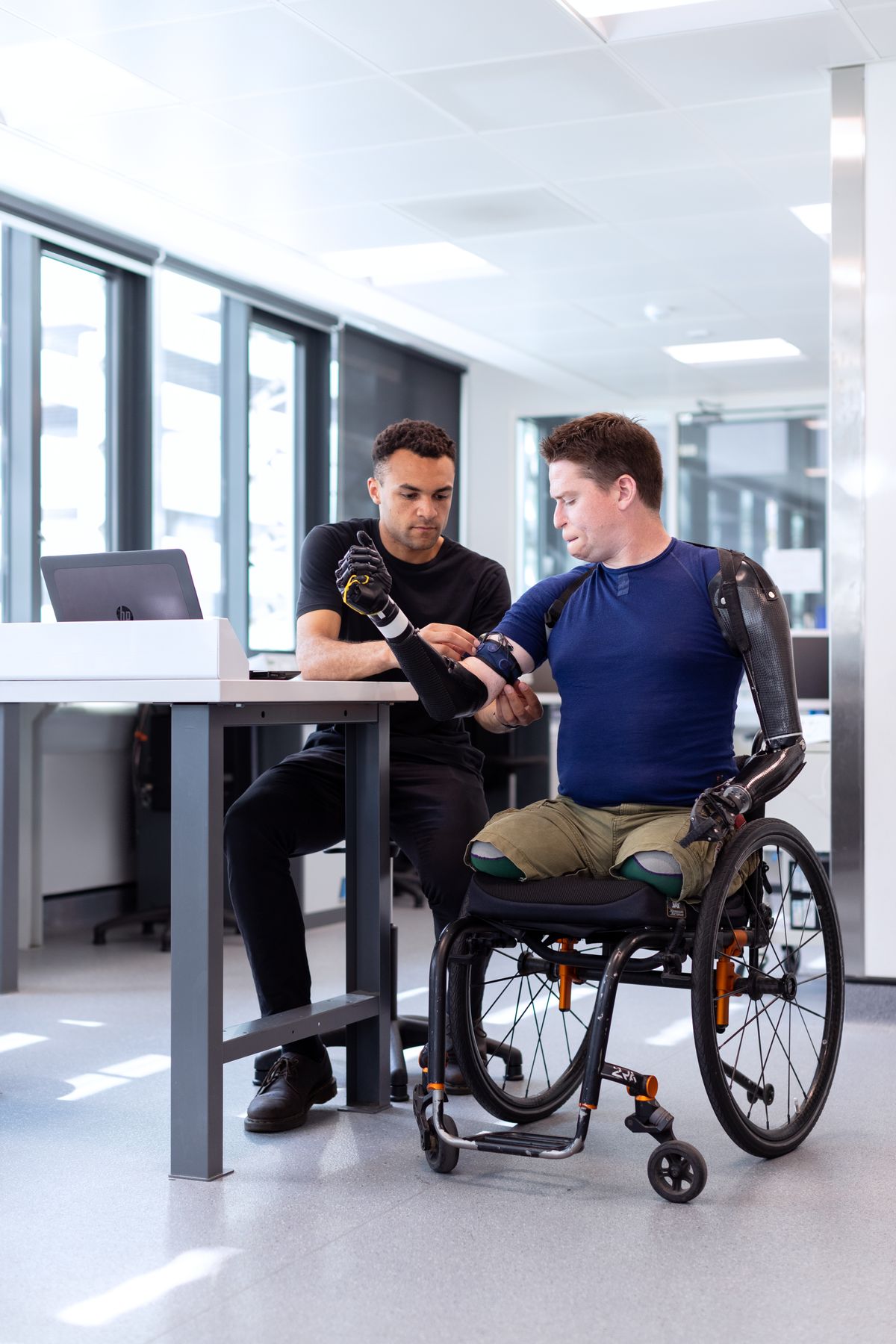
Build proof-of-concept systems that combine software, hardware, IoT, APIs, cloud infrastructure, sensors, web interfaces, and automation before full production investment.
Selected work
Real demos, clearly labelled.
These examples show possible approaches and features. Demo projects are not presented as fictional customers.
Nobuz Market
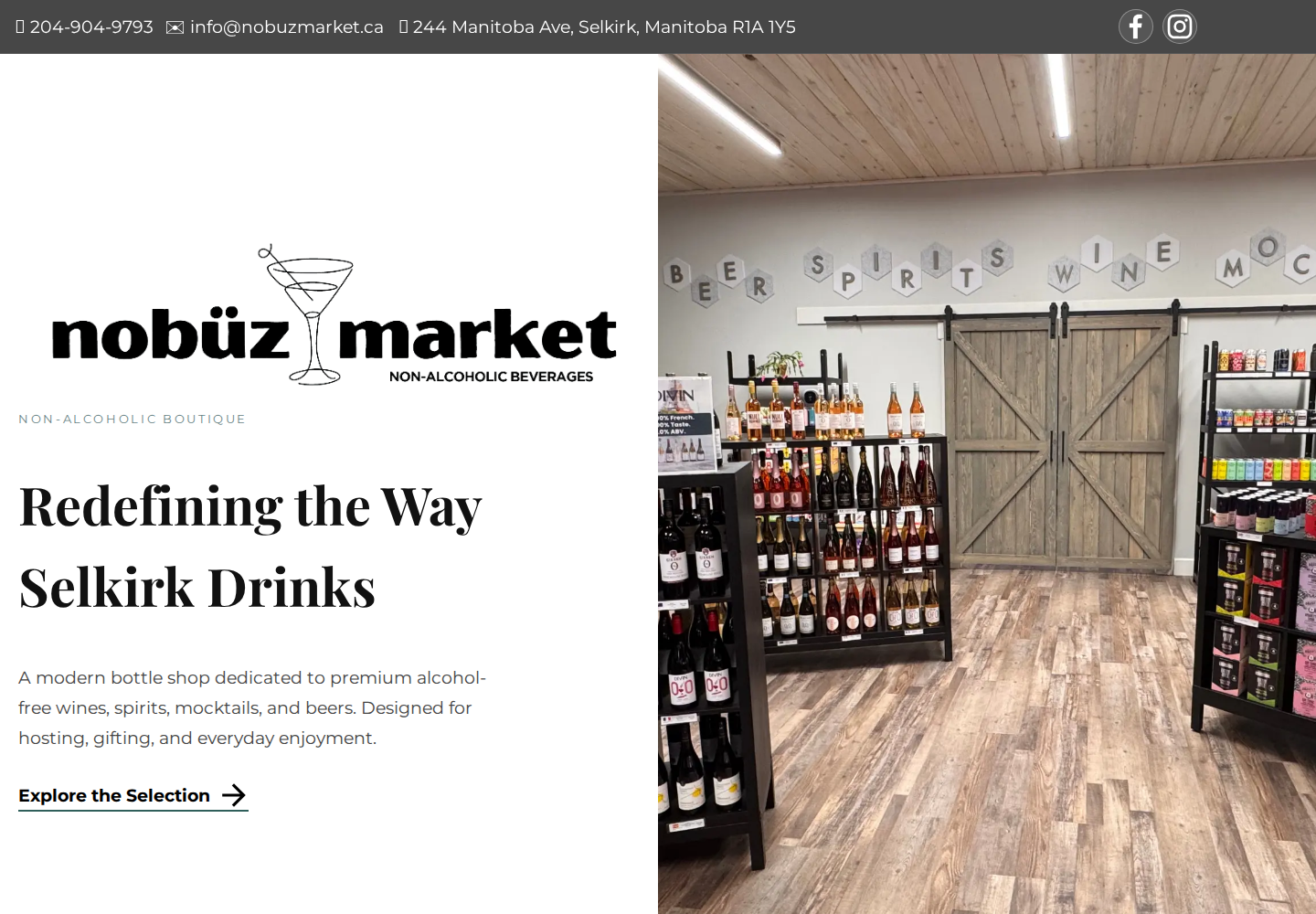
Live Selkirk alcohol-free bottle shop website with product categories, brand listings, events, gallery content, contact details, and local business positioning.
- Live client work
- Large product catalog
- Local retail presence
- Contact and location sections
Trades Pro HVAC
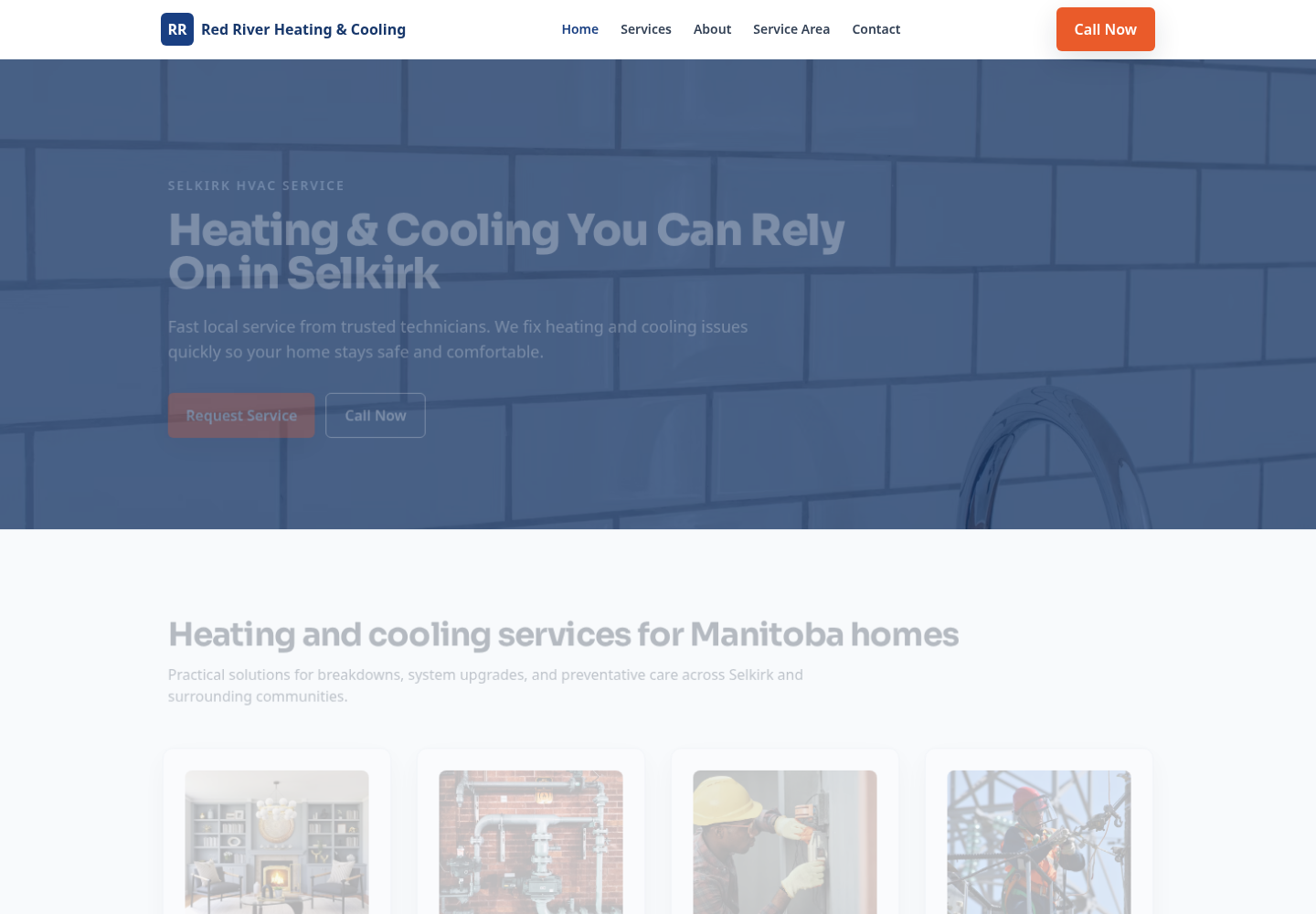
Lead-focused service website concept for a Manitoba heating and cooling company.
- Service pages
- Local SEO structure
- Fast call-to-action paths
Wheatfield Bake Co.
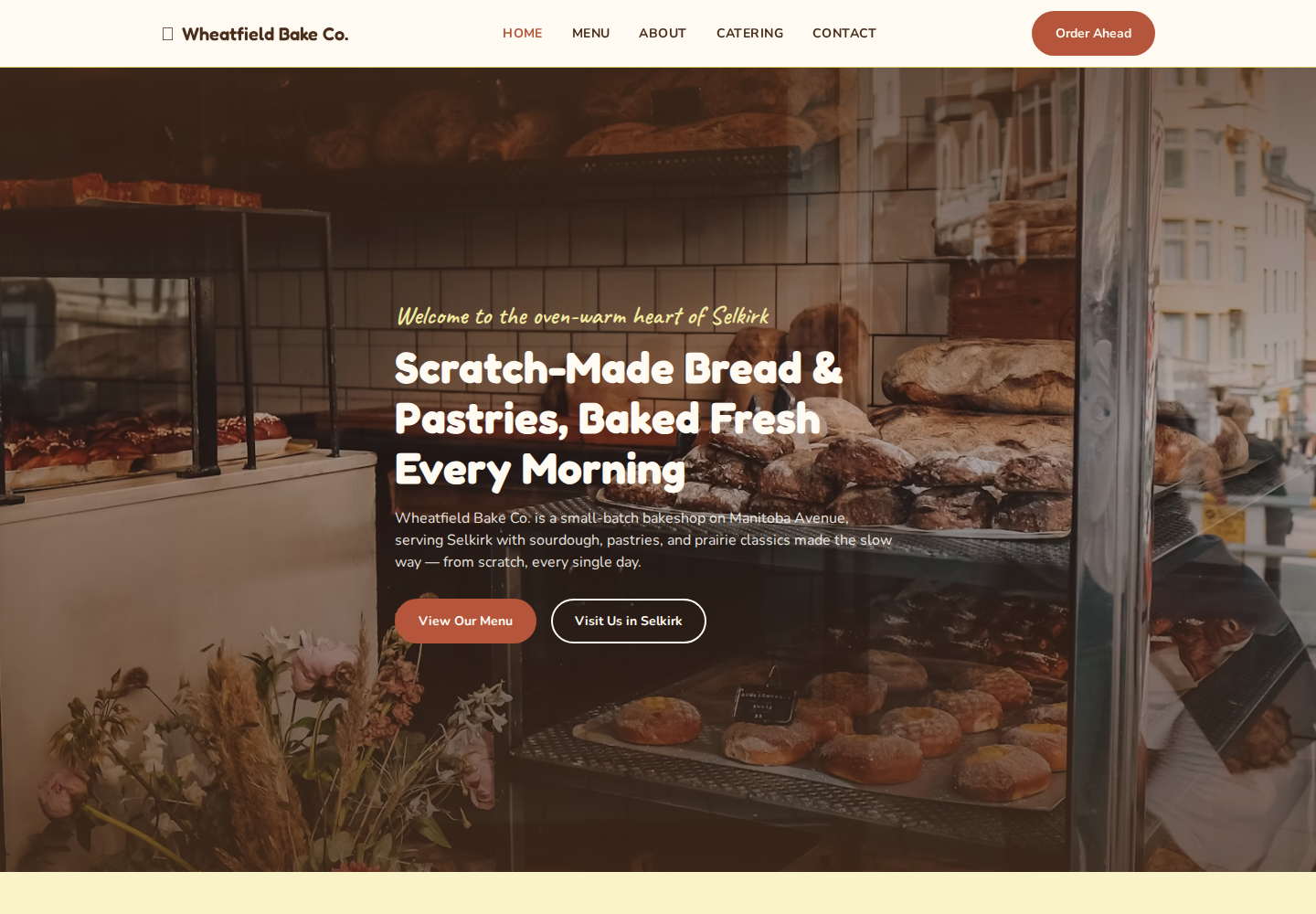
Bakery website demo with menu browsing and order-ahead style interactions.
- Product menu
- Local business storytelling
- Mobile ordering concept
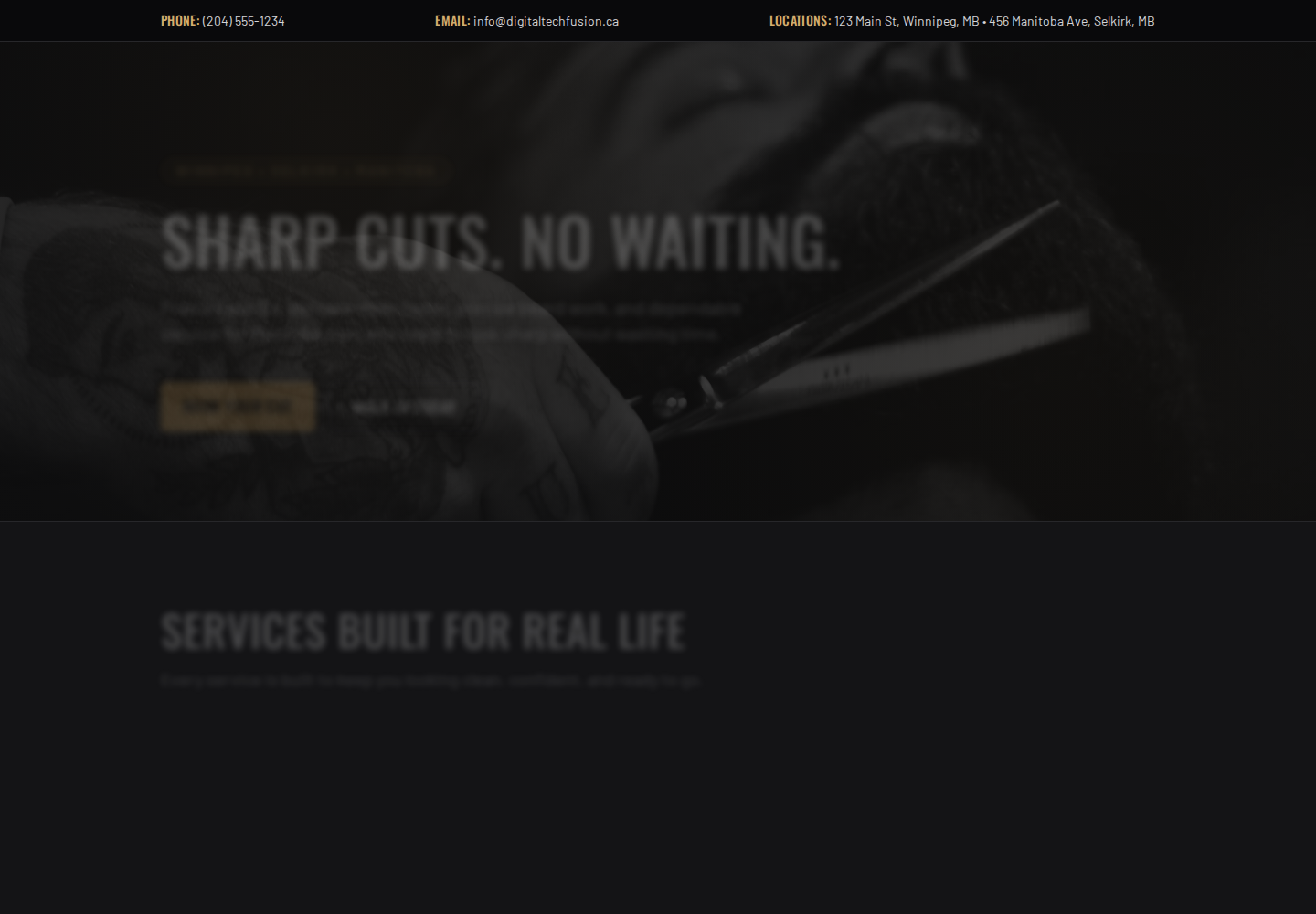
Prairie Fade Co.
Barber website concept for service pricing, locations, and appointment requests.
- Service pricing
- Booking CTA
- Local service copy
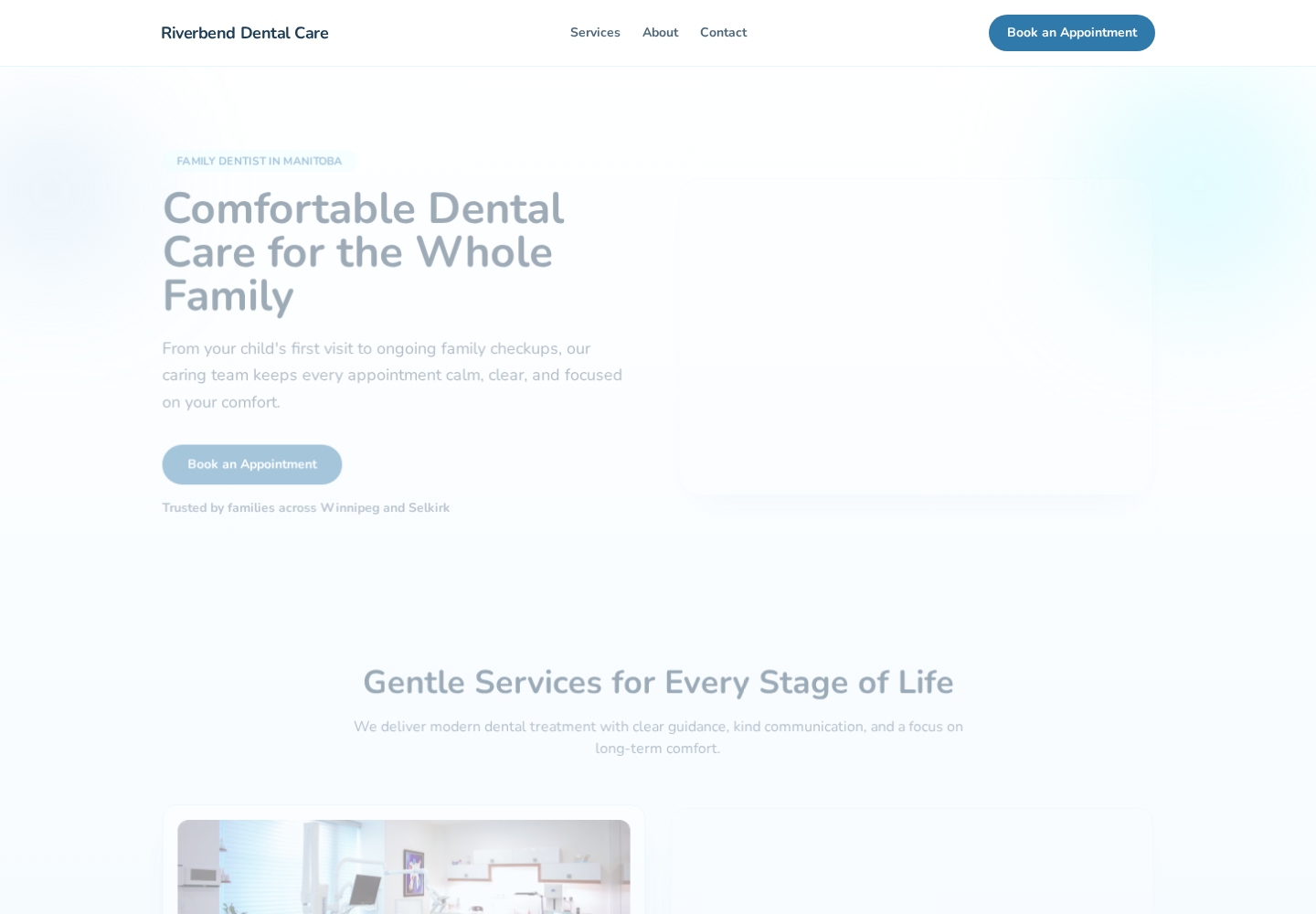
Riverbend Dental Care
Dental practice website demo for family-care positioning and appointment conversion.
- Healthcare layout
- Patient-focused messaging
- Appointment CTA
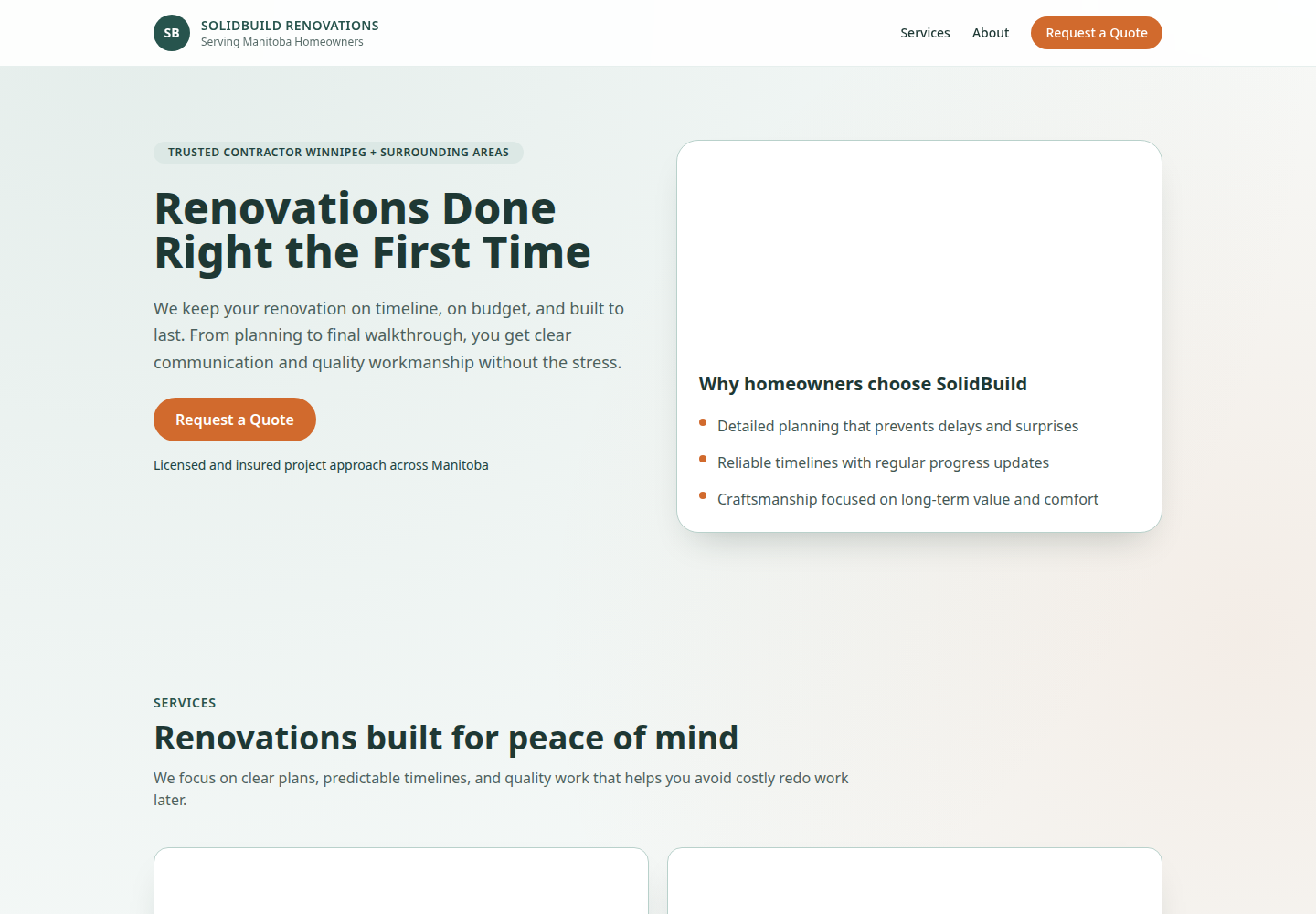
SolidBuild Renovations
Renovation contractor concept with quote capture and transparent project ranges.
- Quote form
- Project ranges
- Trust-building process
Process
A clear path from idea to launched system.
The process adapts to project size, but the decision points stay clear.
Understand the business, users, current technology, requirements, constraints, budget, timeline, and success criteria.
Define architecture, features, integrations, infrastructure, milestones, and deliverables.
Create wireframes, interface concepts, proof-of-concept builds, or technical prototypes where useful.
Build iteratively with regular communication and practical technical decisions.
Test functionality, responsiveness, accessibility, performance, integrations, error handling, and device/browser compatibility.
Launch into an appropriate hosting or cloud environment with production configuration.
Continue with hosting, monitoring, updates, improvements, new features, and scaling when needed.
Delivery details
Not just a design file. The operational details matter.
Many small-business technology projects fail because launch, ownership, access, hosting, forms, backups, and support are treated as afterthoughts. DTF plans those pieces into the work.
Discovery that diagnoses first
We map goals, users, pain points, constraints, budget, timeline, current systems, and the real reason the project matters.
Architecture and content planning
Before development, we define structure, pages, workflows, integrations, technical requirements, hosting, and launch priorities.
Iterative implementation
You see progress as the work develops, with practical checkpoints for design, content, functionality, testing, and launch readiness.
Launch with ownership
Production configuration, DNS, SSL, analytics, forms, hosting, backups, access, and support paths are handled clearly.
Ways to work together
Engagement models for clear projects, uncertain problems, and ongoing support.
Best for websites, MVPs, integrations, small applications, and IoT prototypes with clear requirements.
Best when the business problem is clear but the right technology, scope, or budget is not yet defined.
Useful for architecture, troubleshooting, planning, reviews, modernization advice, and smaller assignments.
Recurring support for hosting, website care, monitoring, application maintenance, backups, and improvements.
Discovery to prototype to MVP to production to growth, reducing risk on larger custom projects.
Pricing guidance
Know whether your project is hundreds, thousands, or tens of thousands.
Ranges are published so early conversations can focus on fit and scope instead of guesswork.
Web Development
Focused 1-3 page site, core messaging, contact form, technical SEO basics.
Custom multi-page site with stronger content, service pages, analytics, and conversion paths.
E-commerce, integrations, database-backed content, or deeper custom functionality.
Software-style web product with accounts, workflows, APIs, or custom data.
Software Development
Replace a narrow repetitive task, spreadsheet, data cleanup, or desktop workflow.
Internal tools, dashboards, API integrations, user roles, and business databases.
Technical feasibility, early product architecture, core workflow implementation, and first usable product version.
Larger systems with multiple workflows, integrations, permissions, and ongoing roadmap.
Cloud, IoT, Hosting & Consulting
Review performance, SEO, accessibility, hosting, automation opportunities, and prioritized next steps.
Architecture planning, AWS/serverless setup, storage, deployment, or modernization.
Raspberry Pi/ESP32 proof of concept, sensors, dashboard, and automation logic.
Managed hosting, SSL, backups, DNS assistance, migrations, and maintenance.
Updates, content changes, monitoring, backups, small fixes, SEO monitoring, and deployment management.
Technical planning, software selection, feasibility, and implementation guidance.
Why Digital Tech Fusion
Trust comes from clarity, capability, and follow-through.
No invented social proof. The site shows transparent pricing, real demos, clear contact details, a defined process, and practical technical boundaries.
Technology
Technologies are selected to support the solution, not to impress with a list.
The stack depends on requirements, budget, maintenance needs, hosting environment, and future expansion.
HTML, CSS, JavaScript, TypeScript, Vue, Nuxt, React, Next.js
Node.js, Python, PHP, .NET, APIs, serverless applications
AWS, Azure where appropriate, Google Cloud where appropriate, Cloudflare, CDN architecture, serverless architecture
Linux, Docker, Git, GitLab, GitHub, CI/CD, Apache, Nginx, DNS, SSL/TLS
SQL, relational databases, application databases, APIs, data integrations
Raspberry Pi, ESP32, microcontrollers, sensors, embedded devices, network-connected hardware
Common questions
Buying technology should feel less uncertain.
How much does a website cost?
Most professional website projects fall between $1,200 and $18,000+, depending on pages, design depth, content, integrations, e-commerce, and custom functionality.
Can Digital Tech Fusion work outside Manitoba?
Yes. Web development, software development, consulting, cloud work, and many support activities can be delivered remotely across Canada and internationally where practical.
Do you build custom software?
Yes. Digital Tech Fusion builds workflow tools, automations, dashboards, database systems, APIs, web applications, Windows utilities, and prototypes.
Do I own my website or software?
Project ownership should be clear in the quote and agreement. Digital Tech Fusion aims for transparent ownership, access, and handoff terms rather than lock-in.
Can I see examples?
Yes. The Work page includes a live client example and clearly marked demo projects that show possible website directions.
Next step